Destination Insurance 2026 Recap: Shaping the Future of the UK Insurance Workforce
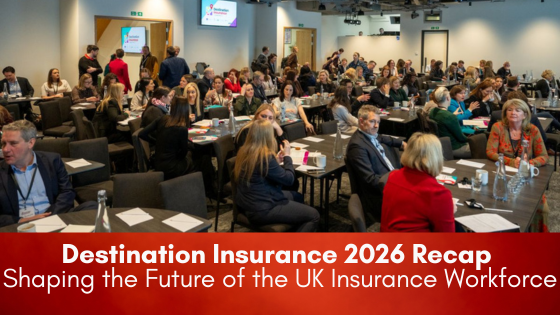
The iCAN team attended the Destination Insurance conference last month, a brand-new conference from Insurance Times focused on one big question: what does the future of the UK insurance workforce need to look like, and how do we get there?
Held at The Minster Building in London, the event brought together leaders from across the market to explore talent, leadership, inclusion, skills and reputation. It was also the launchpad for a new industry charter that aims to turn discussion into coordinated action.
Below we share the iCAN team’s key takeaways from a great day of thought-provoking sessions and workshops.
Setting the scene: from short-term fixes to long-term readiness
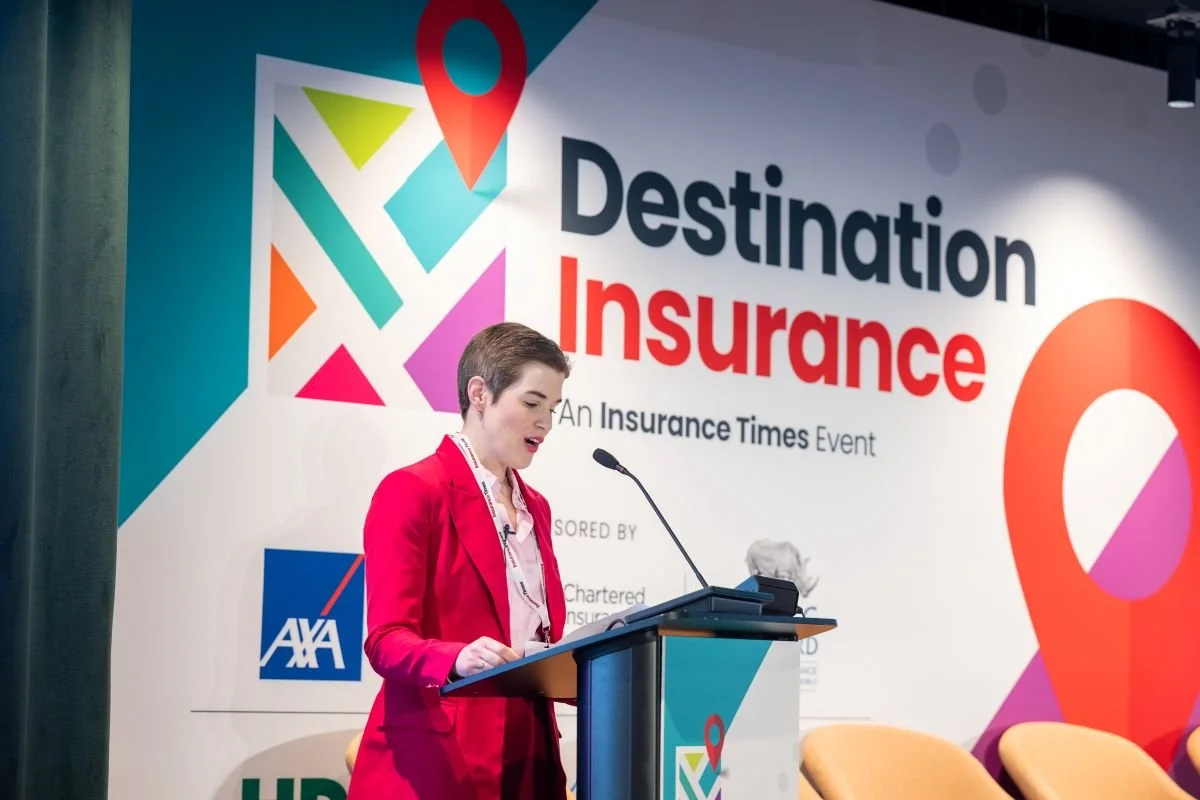
In the opening address, Insurance Times editor Katie Scott framed the challenge clearly. The sector is grappling with skills gaps and competition for talent at the very moment it needs to become more digital, more inclusive and more resilient.
A strong theme from the outset was that this is not just about filling vacancies. It is about long-term workforce readiness, leadership capability and the kind of culture that will attract and retain the next generation.
Leadership in 2026: people, data and plain language
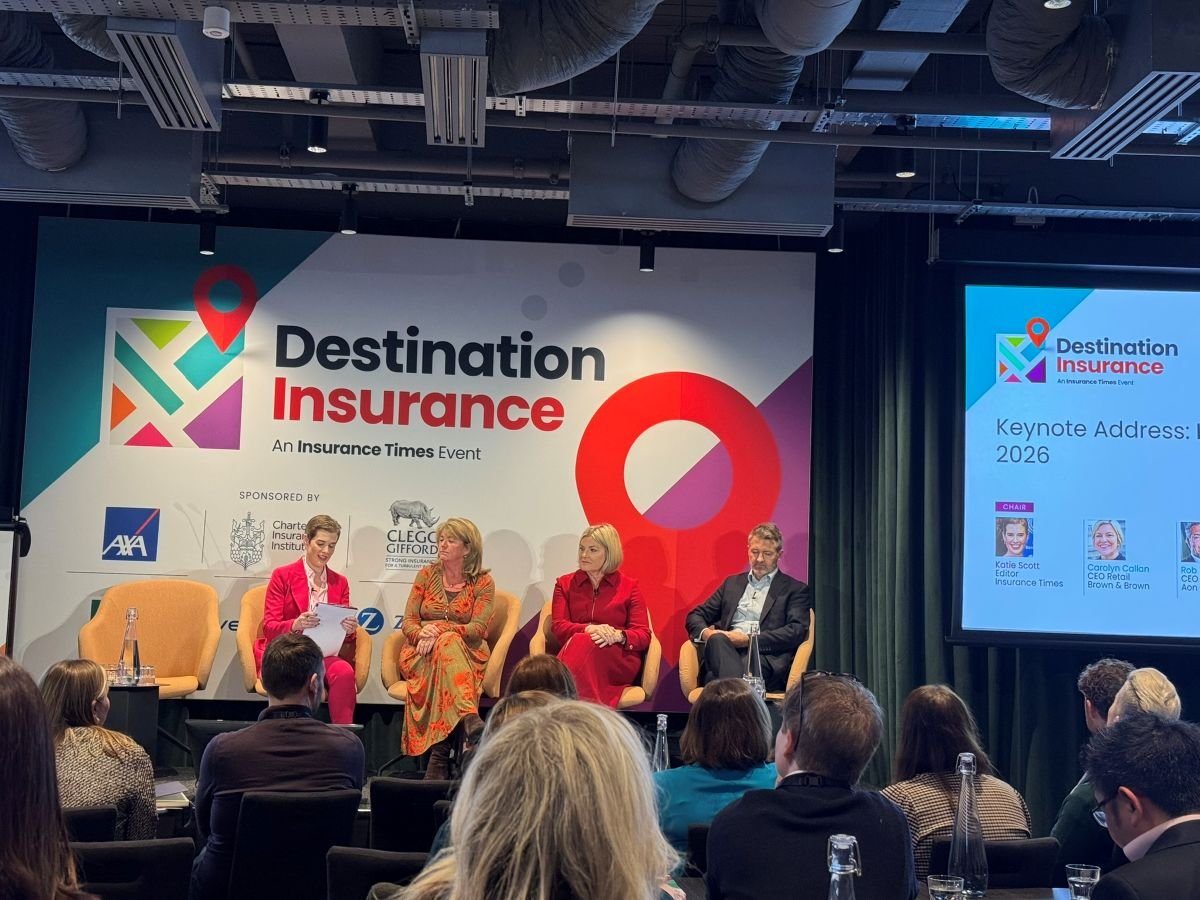
The first session brought together Carolyn Callan (Brown & Brown), Rob Kemp (Aon) and Caroline Wagstaff (London Market Group) to talk about what effective leadership needs to look like by 2026.
Several points stood out:
Responsibility for talent attraction and development sits with the whole leadership team, not just HR.
There is already a lot of good work happening across the market, but it is not being communicated well internally or externally.
Future leaders will need a blend of human skills and analytical capability, empathy, communication and curiosity alongside data literacy and an understanding of AI.
The industry still struggles to explain itself to people outside of insurance. Jargon and acronyms create unnecessary barriers.
Regional collaboration is an underused lever that could significantly strengthen talent pipelines and social mobility.
On hiring, there was a clear consensus: you can teach technical skills, but it is much harder to teach attitude, curiosity and drive. For a sector that wants to diversify, this is an important mindset shift.
Embedding awareness into everyday practice
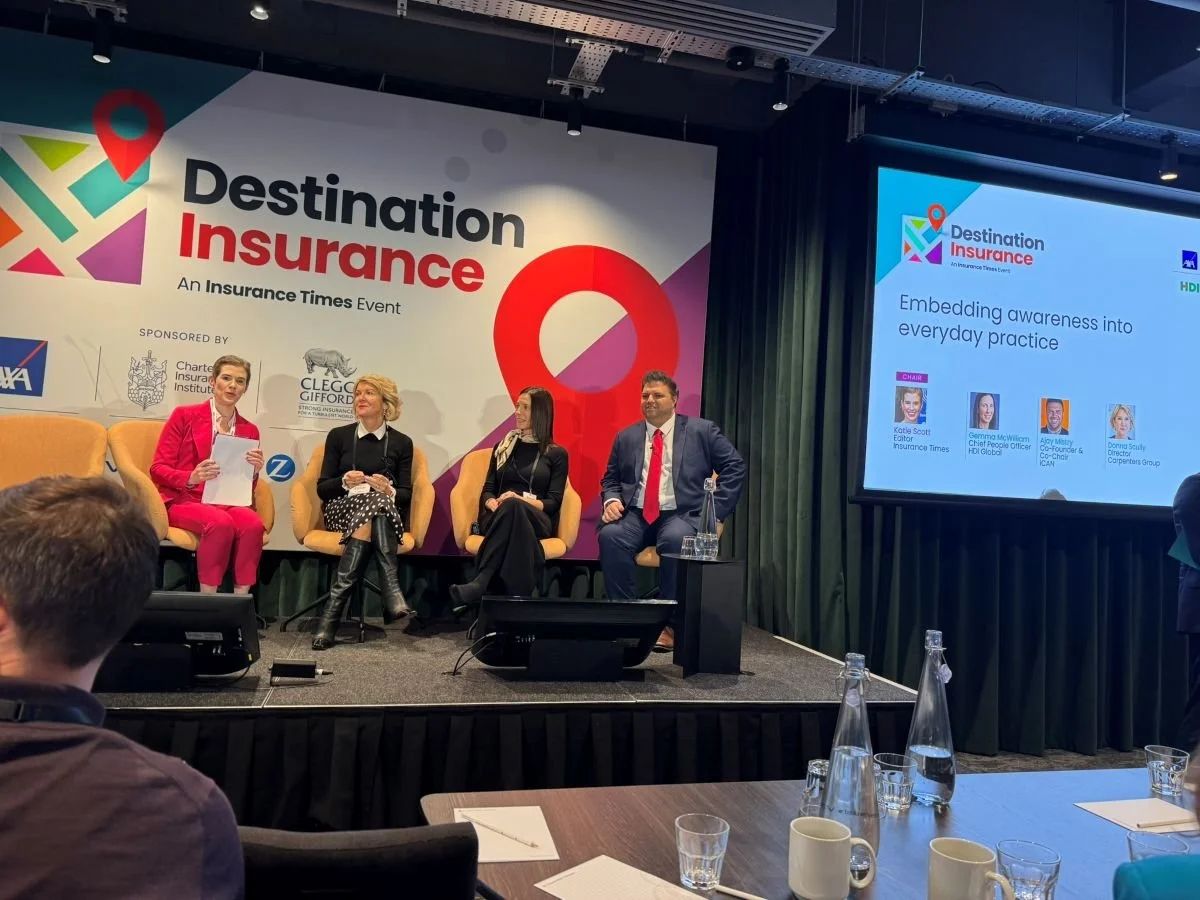
Next up was a session on turning diversity, equity and inclusion from initiatives into everyday practice, featuring iCAN Co-Chair Ajay Mistry, HDI’s Gemma McWilliam and Carpenters Group’s Donna Scully.
The panel made it clear that progress has been made, but there is still a long way to go in embedding accessibility and inclusion across organisations.
Key reflections included:
Trying to do everything at once leads to fatigue and diluted impact. The organisations making real progress tend to pick one or two priorities and focus on doing them well.
Employee Resource Groups (ERGs) are most effective when they have a clear plan, proper resourcing and visible executive sponsorship.
Burnout is a real risk for colleagues who volunteer significant time to networks on top of demanding day jobs, particularly if their work is not properly recognised.
DEI has to be lived and believed in, not launched as a campaign and then quietly parked.
For iCAN, this echoed what we see daily across the market. Inclusion is at its strongest when it is woven into day-to-day decisions, not treated as a separate project.
Apprenticeships: one of the widest access points we have
The case study session on apprenticeships brought together perspectives from different organisations and early careers professionals.
The message was simple but powerful: apprenticeships remain one of the widest access points into the UK insurance sector. When they are designed well, they can open doors for people who might never have considered a career in insurance.
Effective schemes tended to share common features:
Clear structure and expectations from day one
Ongoing support and development beyond completion of the formal programme
Dedicated roles or champions who focus on supporting apprentices
Attitude, curiosity and application were repeatedly highlighted as more important than background. Younger talent is often digitally fluent and excited by AI and technology, but still needs time and patience to build client-facing, relationship and commercial skills.
There is an opportunity for firms to collaborate more openly around what “good” looks like in apprenticeships, so the wider market can benefit.
The Insurance Times Charter: from promise to follow-through
The session introducing the Insurance Times Charter, led by Katherine Bryant (Progress Partnership) and Nicola Maguire (BIBA), focused on commitment and accountability.
The Charter sets expectations around long-term commitment to people, culture and skills. The challenge is not a lack of initiatives, but a lack of consistency and follow-through.
Key themes included:
The need to support managers more effectively with their people and retention responsibilities
The importance of listening to the market and evolving the Charter based on real feedback
A commitment to publish regular talent-focused content to maintain momentum rather than treating this as a once-a-year conversation
From an iCAN standpoint, the Charter could become an important platform for aligning efforts across the market, especially if it is backed by practical action and honest reporting.
Social mobility, neurodiversity and representation
The afternoon panel on social mobility, neurodiversity and representation featured Steve Collinson from Zurich, Simon Cooper-Williams from Markel and Jackie Girow from LIIBA. The session drilled deeper into what true inclusion looks like in practice.
Some of the most striking points were:
Building a diverse organisation is not the same as building an inclusive one. Representation is only the starting point.
Social mobility challenges look very different across regions. Local context matters.
Early careers programmes, outreach and partnerships are vital if the industry is serious about widening access.
Storytelling and visibility matter as much as policy. When people see others like them succeed, it changes what feels possible.
Organisations need to look across the full value chain - suppliers, distribution, claims, underwriting, technology - not just at who they hire.
Flexibility remains one of the most powerful tools we have for increasing accessibility and retention.
Encouraging colleagues to safely share their backgrounds and lived experiences was highlighted as a key way to build understanding, as long as it is done with care, consent and psychological safety.
Claims, reputation and the social value of insurance for Gen Z
The panel session on claims, reputation and social value featuring Bamishe Alao, Jacob Diggle, Laura Griffiths and William Macdonald asked a tough question: how well does insurance articulate its purpose to younger generations?
The panel’s view was that Gen Z is motivated by purpose, impact and ethics, but the industry often fails to make its social value visible. Too often, insurance is seen as a grudge purchase rather than a problem-solving profession.
The panel encouraged the sector to:
Reframe insurance as a career in helping people and businesses recover, rebuild and innovate
Share real-world impact stories, particularly from claims
Make career pathways more transparent and accessible
There was also discussion about how gamification, digital tools and engaging storytelling might help attract and engage younger audiences, particularly those who have never considered insurance as a career option.
Parallel sessions: talent, data and retention
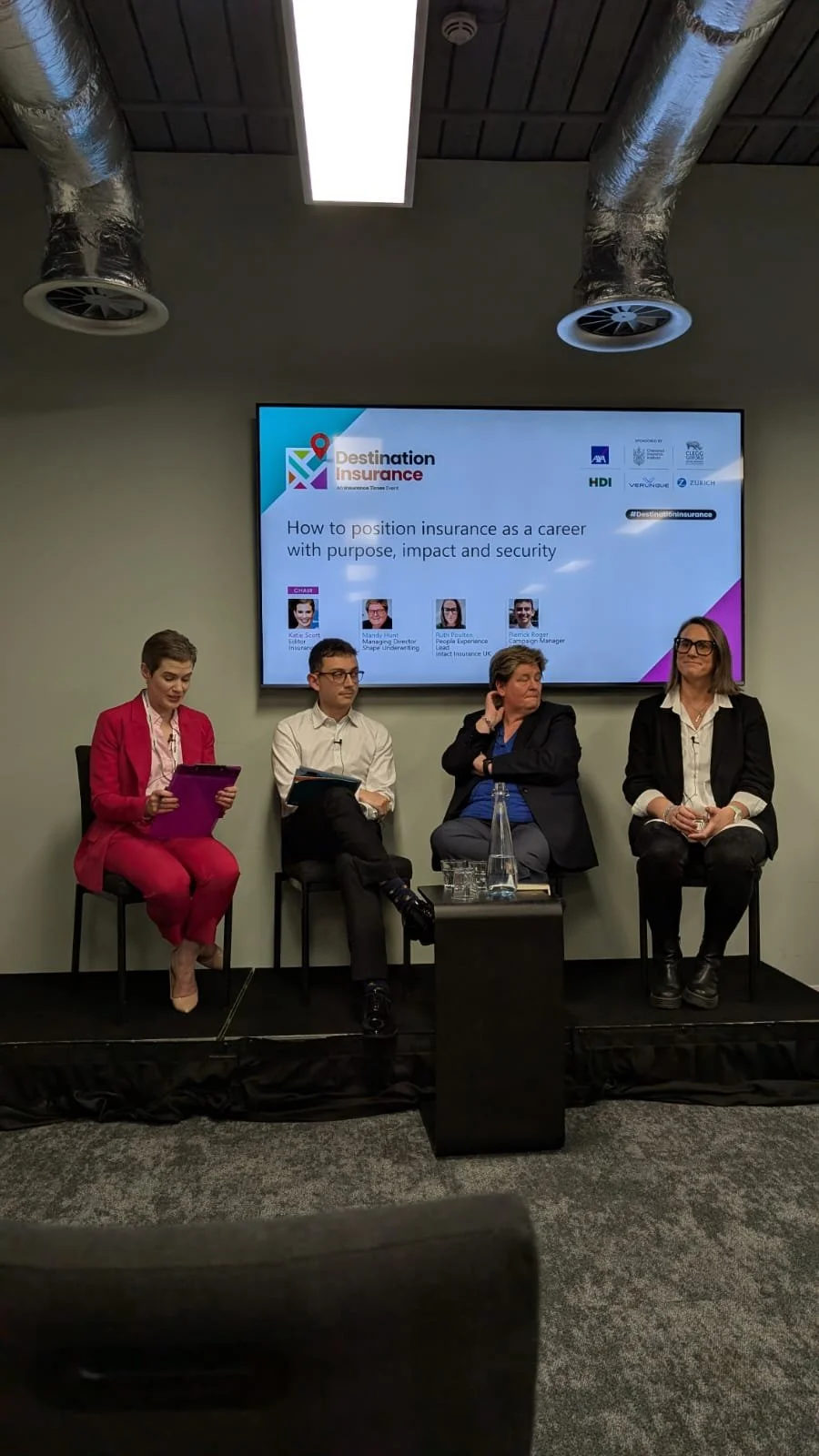
A series of parallel sessions ran throughout the afternoon, picking up three cross-cutting themes.
On data and reporting:
Data is essential for clarity where intuition is not enough.
Metrics can help spot workforce trends early, such as attrition hotspots or progression bottlenecks.
Data should support decision-making, not replace judgement. Human context is still crucial.
On lateral moves and retention:
Internal moves often receive less favourable packages than external hires, which can harm morale and push people out of the organisation.
Fairness, transparency and clear progression routes play a big role in retention.
On shared talent attraction:
The industry’s long-term talent challenge will not be solved by individual firms competing in isolation.
There is scope for more collaboration between insurers, brokers, MGAs and trade bodies to present a more compelling, unified picture of the sector to new entrants.
Digital fluency and future-proofing skills
The digital skills session made it clear that digital fluency is no longer a niche requirement.
Key skills highlighted included:
Data literacy
Understanding of AI and its applications
Comfort with digital workflows and tools
Storytelling and communication
Critical thinking
Collaboration and relationship building
Public speaking and the ability to articulate complex issues clearly
The panel emphasised the need for organisations to be clear on the problems they are trying to solve with technology. Many firms are attempting too much at once, which creates noise rather than progress. Continuous learning and focused experimentation were seen as the way forward.
Culture, data and trust
Running through much of the day was a consistent theme: trust.
Whether the topic was DEI, data, AI or talent retention, trust emerged as the foundation.
Some final reflections:
Education needs to start from the C-suite. Senior leaders must understand both the opportunities and risks linked to data and technology.
Employees need to know how and why their data is being used. Transparency and reassurance around data safety are essential if organisations want to maintain credibility.
Inclusion, culture and data cannot be treated as separate conversations. They are deeply interconnected.
What Destination Insurance means for iCAN and our community
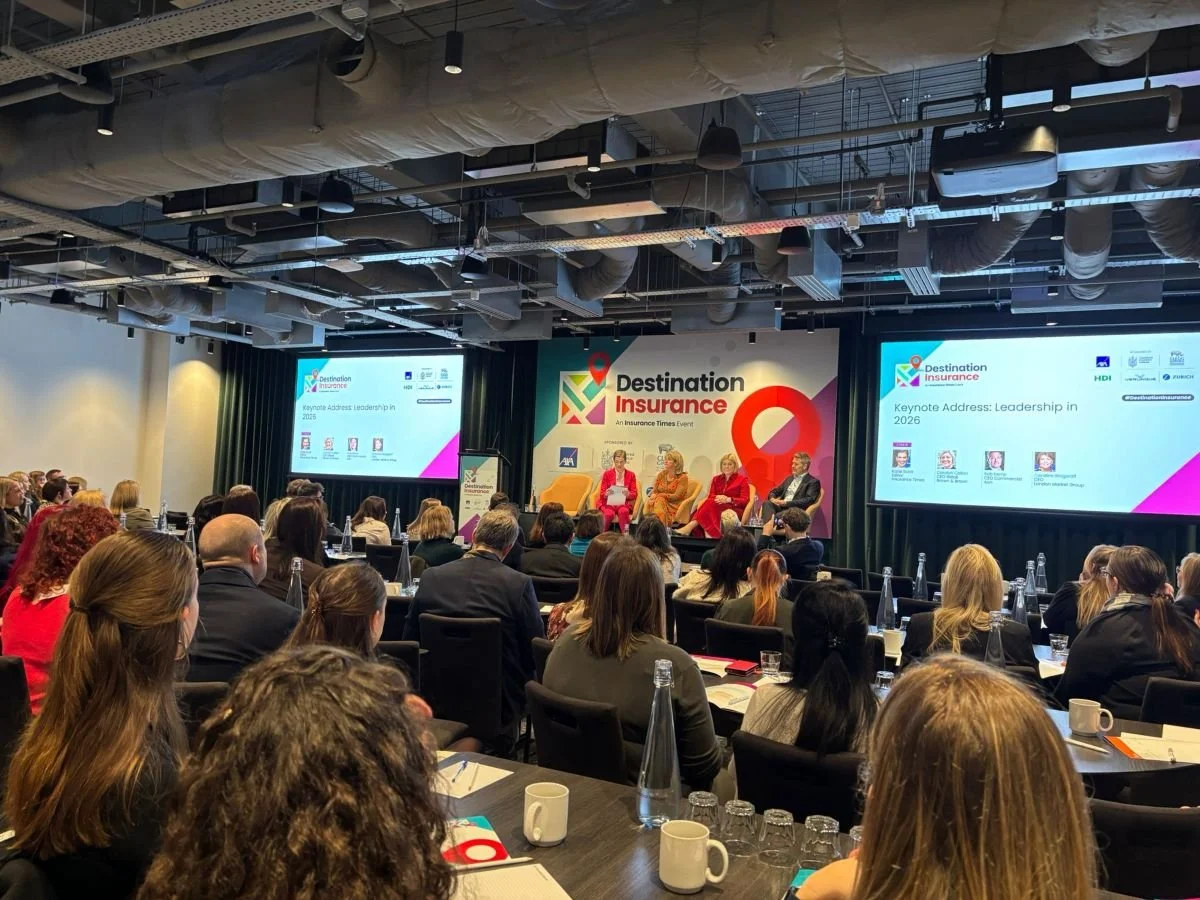
Destination Insurance felt less like a one-off event and more like a starting point for a wider movement. The signed industry charter, the focus on practical solutions and the commitment to ongoing content and collaboration all point in that direction.
For iCAN, several messages resonated strongly:
Talent, inclusion and skills are now firmly at the heart of the industry agenda, not sitting on the sidelines.
There is growing recognition that representation, social mobility and neurodiversity are central to the sector’s future, not “nice to have”.
ERGs, networks and community-led initiatives have a crucial role to play, provided they are properly supported, resourced and connected to decision-makers.
Most of all, the day reinforced that the challenges ahead will not be solved by any one organisation acting alone. Collaboration across the market - between firms, networks, trade bodies and communities - will be essential.
iCAN will continue to play its part by amplifying diverse voices, supporting multicultural talent, and working with partners across the sector to turn good intentions into meaningful, measurable change.
What next?
As the industry looks for practical ways to turn these conversations into action, we believe Employee Resource Groups will be central to that shift. That’s exactly why we’re launching the ERG Blueprint Conference - a dedicated one-day event for ERG leaders, HR and DEI professionals, and executive sponsors to focus on structure, strategy and impact.
If your organisation wants to better support its networks, reduce burnout and unlock the full value of ERGs, we’d love you to join us. Find out more and register your interest at https://erg-blueprint.co.uk/