How AI Is Changing Careers in Insurance: Key Takeaways from the iCAN Birmingham & PwC Panel Event
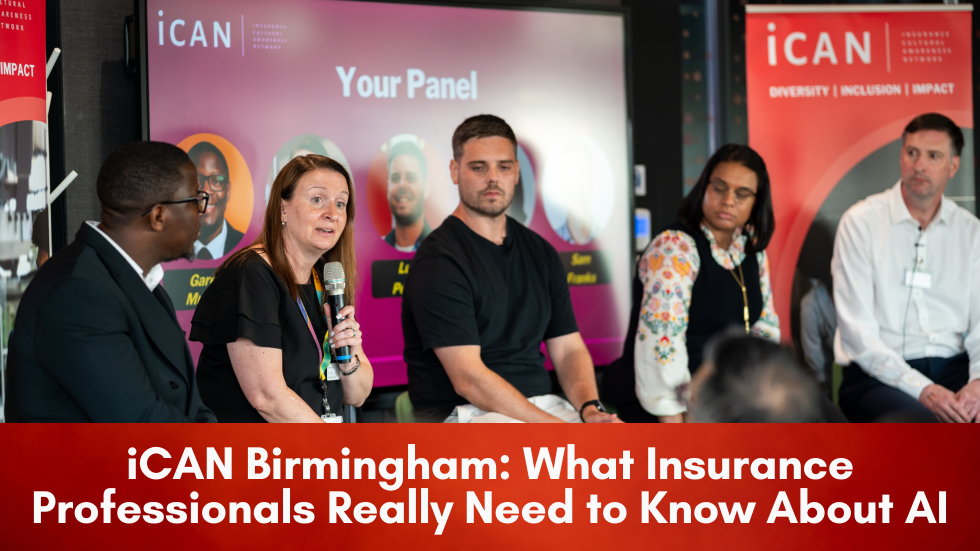
iCAN Birmingham recently hosted AI & Your Career: What Works, What Helps and What's Next?, delivered in partnership with PwC.
Artificial Intelligence is dominating conversations across every industry, but what does it mean for professionals working in insurance today?
On Thursday 25 June, iCAN Birmingham, in partnership with PwC UK, hosted “AI & Your Career: What Works, What Helps and What's Next?” at PwC's Birmingham offices. Bringing together professionals from across insurance, consulting and technology, the event focused on practical, honest conversations about how AI is already changing the workplace, the opportunities it presents, and the skills professionals need to develop as the technology continues to evolve.
Rather than debating what AI might look like years from now, the panel shared real-world experiences of how they are already using AI to improve productivity, support decision-making and create more time for higher-value work.
Meet the Panel
The discussion featured insights from an experienced panel representing insurance, consulting and professional services:
Gareth Mutema – Senior Manager, iCAN (Panel Host)
Wendy Travers – Branch Manager – Midlands, Aviva
Luke Perkins – Head of Commercial, Gambit Insurance
Narrinder Kaur Bahia – Director, PwC UK
Sam Franks – Country Manager UK & Ireland, Beazley
Together, they explored how AI is reshaping careers, why curiosity has become one of today's most valuable professional skills and how organisations can adopt new technologies whilst maintaining the human judgement, relationships and trust that remain central to the insurance profession.
Three Key Takeaways
Before diving into the discussion in more detail, three clear messages emerged throughout the evening:
AI is already becoming part of everyday work, helping professionals save time, improve productivity and focus on higher-value activities.
Curiosity and continuous learning will be critical career advantages, regardless of your current role or level of technical expertise.
Human skills such as judgement, communication, empathy and relationship building will become even more valuable as AI adoption increases.
AI Is Already Changing the Way We Work
One of the strongest messages from the discussion was that Artificial Intelligence is no longer something to prepare for in the future. It is already influencing the way many professionals work today.
Across organisations, AI is helping people summarise information, prepare reports, draft communications, analyse data, and reduce the time spent on repetitive administrative tasks. Rather than completely transforming roles overnight, the technology is quietly becoming another tool that supports day-to-day productivity.
The panel agreed that this shift should be viewed as an opportunity rather than a threat. By reducing time spent on routine tasks, professionals can dedicate more attention to activities that require experience, judgement and human interaction. In an industry built on trust and relationships, this creates more opportunities to focus on delivering greater value for clients and colleagues alike.
Curiosity Is Becoming One of the Most Valuable Career Skills
A recurring theme throughout the evening was the importance of remaining curious.
Many people feel they need to become experts before they begin using AI tools. The panel challenged that thinking, encouraging attendees to simply start experimenting.
Whether using AI to improve presentations, prepare for meetings, organise ideas or summarise lengthy documents, every interaction helps build confidence whilst also improving understanding of the technology's strengths and limitations.
Careers have always required continuous learning. AI represents another opportunity for professionals who are willing to remain adaptable, ask questions and embrace new ways of working.
Human Skills Will Become Even More Important
Despite the focus on technology, one of the evening's strongest messages had very little to do with AI itself.
Throughout the discussion, the panel repeatedly returned to the importance of the skills that technology cannot easily replicate. Communication, empathy, leadership, critical thinking, relationship-building and professional judgement remain fundamental to successful careers in insurance.
AI can generate ideas, summarise information and improve efficiency, but it cannot replace the trust built between brokers and clients, the reassurance provided during a complex claim or the judgement required when making important underwriting decisions.
Rather than reducing the importance of people, AI is likely to place even greater emphasis on the qualities that make professionals effective in the first place.
AI Should Support Decisions, Not Replace Them
Another important takeaway centred around responsible AI adoption.
Whilst AI tools can significantly improve efficiency, the panel stressed that they should never replace professional judgement. Outputs should always be reviewed, facts verified, and recommendations considered within the context of the individual situation.
This is particularly important within insurance, where decisions often involve complex risks, regulatory requirements and significant financial implications.
The discussion reinforced that AI should be viewed as an intelligent assistant rather than a decision-maker. Human oversight will remain essential as organisations continue integrating AI into everyday business processes.
Learning Doesn't Need to Be Complicated
One of the most practical messages from the evening was that getting started with AI does not require specialist knowledge or extensive technical training.
The panel encouraged attendees to begin with the tools already available to them, ask questions, experiment with prompts and gradually build confidence through everyday use.
Simple tasks such as organising notes, summarising meetings, drafting emails or supporting research can quickly demonstrate where AI delivers genuine value.
By developing familiarity now, professionals will be better prepared as AI becomes increasingly embedded across the insurance industry.
Looking Ahead
The discussion concluded with a positive and pragmatic outlook.
Artificial Intelligence will undoubtedly continue to influence the insurance industry, but its greatest value lies in supporting people rather than replacing them. The organisations that will benefit most are those that combine technological innovation with strong leadership, sound judgement and meaningful human relationships.
For individuals, the message was equally clear: remain curious, embrace continuous learning and continue developing the skills that technology cannot replicate. Those qualities will become increasingly valuable as the profession evolves.
A huge thank you to PwC UK for hosting the event, and to Gareth Mutema, Wendy Travers, Luke Perkins, Narrinder B and Sam Franks for sharing their experiences, practical advice and honest perspectives throughout the evening. Thank you also to everyone who attended, contributed to the discussion and helped make the event such an engaging and thought-provoking success.
About iCAN
The Insurance Cultural Awareness Network (iCAN) is a leading organisation committed to promoting diversity and inclusion in the insurance sector. Established in 2017, iCAN has been instrumental in spotlighting cultural awareness, fostering talent, and championing diversity within the industry.