
The ERG Blueprint Conference 2026: What We Learned, What Changed and What Comes Next
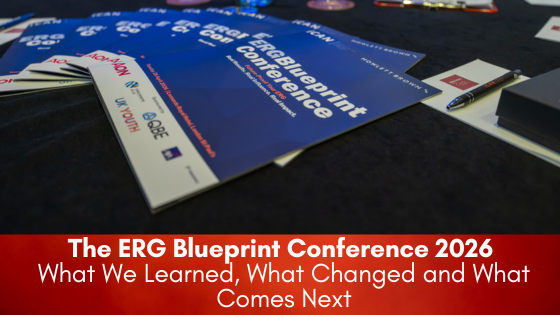
On 28 April 2026, more than 250 ERG leaders, DEI practitioners, HR professionals and executive sponsors gathered for the inaugural ERG Blueprint Conference, co-organised by iCAN and Howlett Brown.
"This isn't just another conference," said Charlene Brown, Co-Founder of Howlett Brown. "We've really been intentional about what we've built."
"In times of change and uncertainty, people need connection," added iCAN Co-Chair Ajay Mistry. "They need community, spaces that feel safe, where they feel heard and supported. If anything, the need for ERGs in 2026 is stronger than ever."
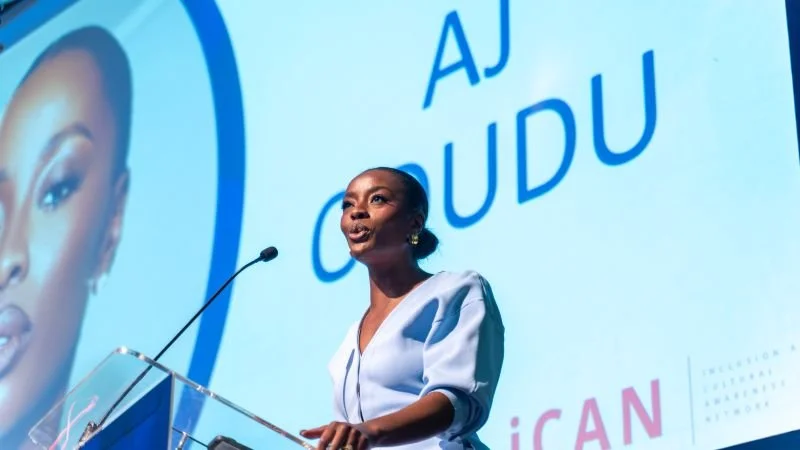
Hosted by broadcaster and presenter AJ Odudu, who set the tone with characteristic warmth and directness, the conference moved through eight sessions covering everything from the business case for ERGs to the long-term implications of artificial intelligence for social mobility.
Key Takeaways for ERG Leaders
The central takeaway from the whole conference was that ERGs are no longer just networks, support groups or event organisers. At their best, they are strategic assets that help organisations understand their people, strengthen culture, improve decision-making and prepare for the future.
Below we highlight some of the key takeaways and messages from the day:
1. ERGs need to move from activity to impact
The strongest message across the conference was that ERGs can no longer rely on event attendance, passion or visibility alone. They need to show the difference they are making.
That means moving from:
“We hosted three events this quarter”
to:
“We improved engagement, informed policy, supported retention, influenced recruitment or helped the business solve a problem.”
The standout advice was to pick a small number of metrics that matter, such as reach, engagement, retention, promotion, participation, leadership development or policy change, and report them consistently.
Key message: ERG success should not be measured by how full the room is, but by what changes because the room existed.
2. ERGs must speak the language of the business without losing their community purpose
There was a clear theme that ERGs are at their best when they combine community insight with business relevance.
The community element still matters deeply. ERGs create belonging, psychological safety, peer support and connection, especially for people who may not see themselves represented elsewhere in the organisation.
But to influence senior leaders, ERGs also need to translate that value into language the business understands. That could mean connecting ERG work to areas such as:
Retention
Recruitment
Talent progression
Employee engagement
Risk
Client insight
Innovation
Brand trust
Market understanding or regulatory readiness.
Key message: The future of ERGs is not choosing between community and commercial value. It is showing how the two strengthen each other.
3. ERG leaders need proper recognition, structure and support
A major recurring point was that ERG leadership is real leadership. It builds influence, communication, stakeholder management, emotional intelligence, strategic thinking and the ability to lead without authority.
But too often, ERG leaders are expected to deliver this work on top of their day jobs with limited time, little budget and inconsistent support.
The conference content repeatedly pointed to the need for clearer recognition, including time allocation, performance objectives, manager alignment, training, senior sponsorship, access to leaders and, where possible, financial recognition.
Key message: ERG leadership should be treated as leadership development, not voluntary extra work hidden at the edges of someone’s role
4. Sponsors, Legal, HR and middle managers need to become active partners
Another clear takeaway was that ERGs cannot carry organisational change alone.
Executive sponsors should not just open events or lend their name to a network. They should advocate in rooms ERG leaders are not in, connect ERGs to decision-makers, challenge them constructively and help translate their work into business impact.
Legal and HR also need to be brought in as partners, not blockers. Several sessions stressed the importance of open Q&As, practical guidance and region-specific nuance, especially as DEI language and regulation become more complex.
Middle managers were also highlighted as crucial. They are often the people who decide whether ERG work is genuinely supported, whether employees can make time for it and whether inclusion becomes part of everyday culture.
Key message: ERG impact depends on shared ownership. ERG leaders can surface insight and drive momentum, but sponsors, HR, Legal and managers need to help turn that insight into action.
5. The next generation of ERGs will be more strategic, more intersectional and more technology-aware
The conference painted a clear picture of where ERGs are heading.
By 2030, the most effective ERGs will be less siloed, less event-led and more embedded in organisational decision-making. They will collaborate across identities, pool resources, build stronger external partnerships and act as culture carriers, insight engines and strategic advisors.
AI was also a major theme. The message was not that AI will replace ERG work, but that it can support it by reducing admin, analysing feedback, spotting patterns and helping build stronger business cases. At the same time, ERGs have an important role to play in making sure AI adoption is ethical, inclusive and representative.
Key message: The ERGs that thrive will be the ones that protect human connection while using data, technology and collaboration to increase their influence.

ERG Blueprint 2026 – Session by Session Breakdown
Below is a summary of the day's key themes, insights and frameworks from each of the eight sessions, panel discussions and keynote speeches.
Session One: Why It's Worth It – Framing the Value of ERGs for Chairs, Members, DEI Leads and Sponsors
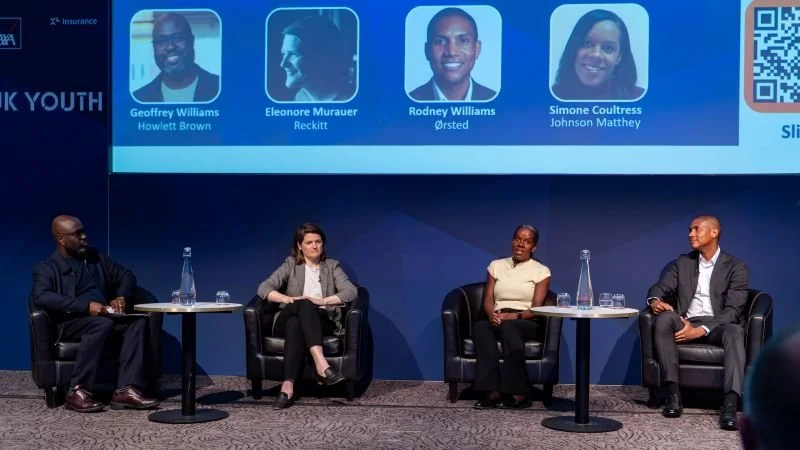
Simone Coultress, Global Head of D&I at Johnson Matthey, began by describing how founding the Black Employee Network in 2018 changed her career entirely. "The headline of what ERG leadership has given me is a new career path," she said. "It gave me the opportunity to raise my visibility, build connections with senior leaders and access a global network my day job would never have allowed." The lesson: ERG leadership is a laboratory for demonstrating potential, not a distraction from it.
Rodney Williams, Senior Commercial Manager at Orsted, brought it back to belonging. "Not having people like you in the room is quite difficult," he said. "The ERG was a really good induction. It helped me get a sense of belonging and set me on a great career."
The session reached a nuanced conclusion on the question of recognition. Where direct financial reward is not possible, ERG leaders should expect formal recognition through performance objectives, protected time, senior sponsorship and access to leadership development. ERG leadership is real leadership, whatever the organisation decides to pay for it.
Eleonore Murauer, Area Brand Director and global lead of her organisation's LGBTQ+ ERG, added: "Representing diverse audiences helps the brand grow, helps us grow equity and helps us be more effective at reaching our audiences," she said. "There is definitely a financial component to it."
Session Two: Navigating Political Turbulence – ERGs in a Shifting Global Landscape
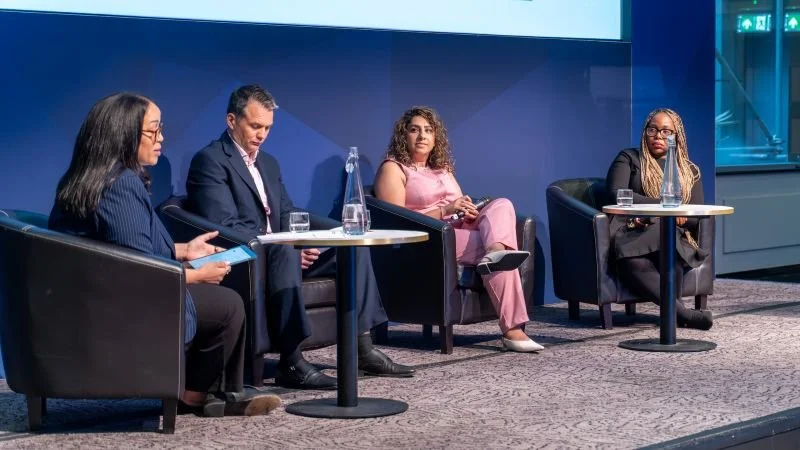
Panel host Charlene Brown of Howlett Brown revealed that a poll of the conference audience revealed that 54% of delegates cited budget and resource cuts as their primary challenge. The panel's answer was not to slow down but to sharpen up.
Rimi Bassi, Global ERG Manager at National Grid, described treating external pressure as an opportunity rather than a threat. "We used it to clarify our language, align our ERGs to business outcomes and make sure our programmes were crisper and more compliant," she said.
Across 16 ERGs and more than 500 initiatives, the approach was to own the relationship with Legal directly, running open Q&A sessions that demystified constraints and replaced blanket restrictions with actionable guidance.
The consistent message from the panel, which also included Lee Harding from DLA Piper and Euromonitor’s Adeife Onwuzulike, was: targeted, structured, outcome-aligned ERG work is harder to cut than activity that cannot demonstrate its value. Connect your work to the vocabulary the business already uses, whether that is sustainability, risk, talent pipeline or social impact, and you remove the excuse to deprioritise it.
Session Three: Effective Communication and Storytelling for ERGs – Defining and Showcasing Your ERG’s Unique Voice
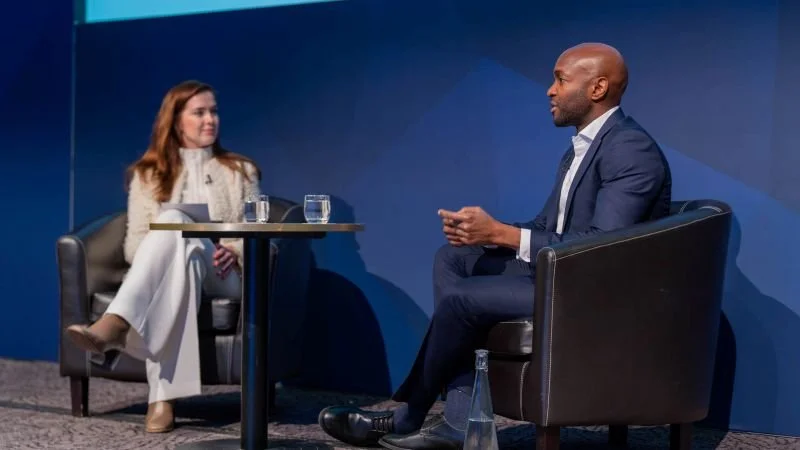
Richard Etienne, Founder of The Introvert Space, challenged ERGs to build clarity before they build content. "Start with your Unique Selling Point," he said. "Really work out who you are, why you are needed within that organisation, and link it to the organisation's mission, values and purpose. Without your ERG, this problem doesn't get solved. And once the team takes that back and starts building out that case, the work speaks for itself."
Richard’s section on strategy was practical and direct. Rather than producing high volumes of ERG-led content, the session explored the value of featuring across other internal platforms, appearing as a guest in other teams' communications and partnering with adjacent functions such as internal comms, sustainability and social impact.
The advice to avoid corporate language that signals commitment without describing action was direct: stop opening every communication with the words "we are committed to." Instead, talk about what has changed, why it changed and what will be different as a result. Use storytelling. Use the STAR framework, situation, task, action, result, to build a narrative that holds up when scrutinised by sceptical stakeholders.
During a Q+A session with iCAN’s Natalia Zurowski, Richard also noted the growing importance of social media as an ERG channel, not just for external visibility but for building community in ways that feel genuine. Opt-in engagement on social platforms tends to attract people who want to be there, which changes the quality of conversation.
Session Four: Identifying Challenges, Barriers & Solutions in Employee Resource Groups
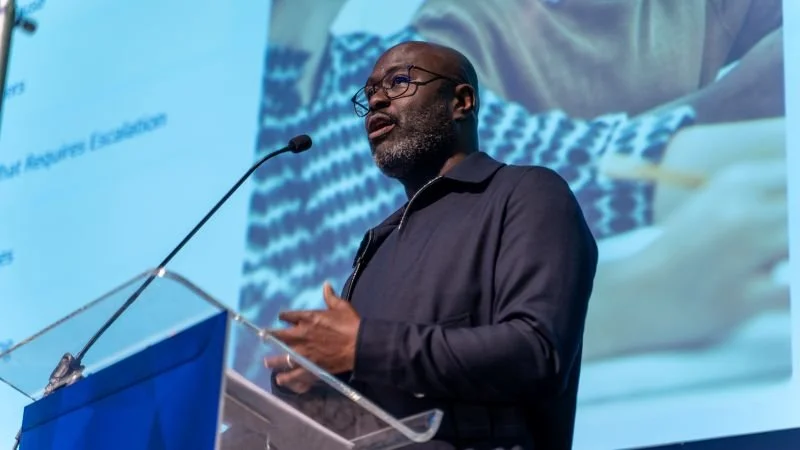
Geoffrey Williams, Head of Culture and Sustainability at Howlett Brown, opened the afternoon with a discipline most ERGs skip: root cause analysis. Low event engagement, a disappearing sponsor, a shrinking budget. But treating the symptom without understanding the system means the same problem returns in a different form.
"The temptation is to fix the symptom because it is right in front of you," he said. "But if you treat the symptom without understanding the system, the same problem keeps coming back."
The workshop drew two distinctions that ERG leaders can apply immediately. First, structural versus cultural barriers: structural barriers sit in policy, process and governance; cultural barriers sit in norms, assumptions and behaviours. They require different interventions. Second, what you can control versus what requires escalation. Representation gaps in senior leadership, pay inequity, biased recruitment processes: these belong to HR, to culture teams, to executive sponsors. "ERGs supply insights, external context and user feedback," Geoffrey Williams said. "They are not the function that rewrites policy. They are the function that makes the case for why it needs to be rewritten."
On sponsors: an active sponsor advocates in rooms the ERG does not occupy, raises ERG insight in executive discussions, and can articulate what the ERG is trying to achieve in terms a finance director would understand. Treat the relationship like a coaching relationship - brief them consistently and give them specific asks, not a general request for support.
Session Five: Measuring ERG Impact - Data that Influences Without a Budget
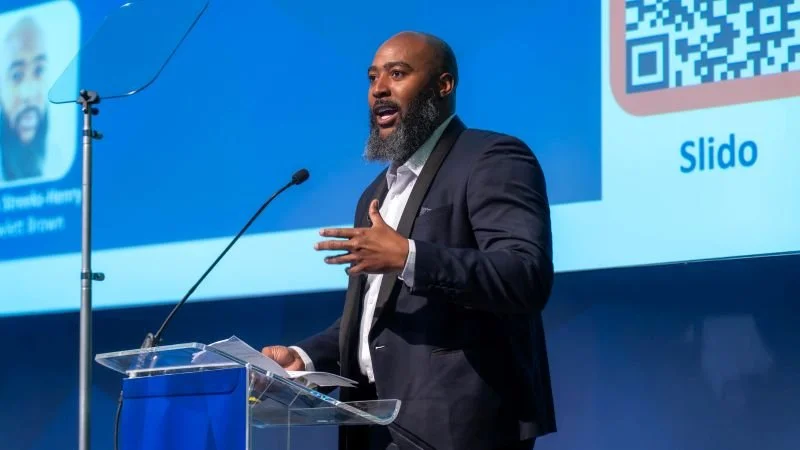
One of the most practical sessions of the day was led by Anton Streeks-Henry, Cultural Sustainability Manager at Howlett Brown, supported by Morgan Hake, Advisory Analyst and Trainee Solicitor. The session focused on how ERGs can use data to make their case, even when budgets have been cut, and access to HR data is limited.
Anton introduced a framework built on three letters: APR (Attraction, Promotion, and Retention). Developed across 14 ERGs in a single organisation, it was designed to ensure every ERG initiative mapped directly to an outcome the business already measured. "It was easy for everyone to remember because it aligned with what the business is all about," he said. "And it meant I could ensure all my initiatives lit up one of those three pillars."
The broader data strategy: Measure, Understand, Act, Show Impact. Define three to five metrics connected to business priorities. Understand what lies behind them by consistently collecting feedback. Convert insights into structured interventions. Then report back in a format that becomes a habit.
The reporting structure for senior leaders is even simpler: what we did, what changed, what we need. "Closed mouths don't get fed," he said. "If you want people to invest in your ERG, you have to speak about it." One-question pre- and post-event surveys, themed testimonial analysis, and membership growth-tracking cost nothing and build a credible business case over time.
He also noted that 56 per cent of delegates responding to a live Slido poll had experienced funding cuts, which made the point about evidencing value without budget directly relevant. One-question pre- and post-surveys at ERG events, themed analysis of testimonials, and tracking membership growth following specific initiatives are all methods that cost nothing but generate the kind of data that builds a credible business case over time.
Session Six: Keynote - Personal Brand, Leadership & Power – Building Networks That Last
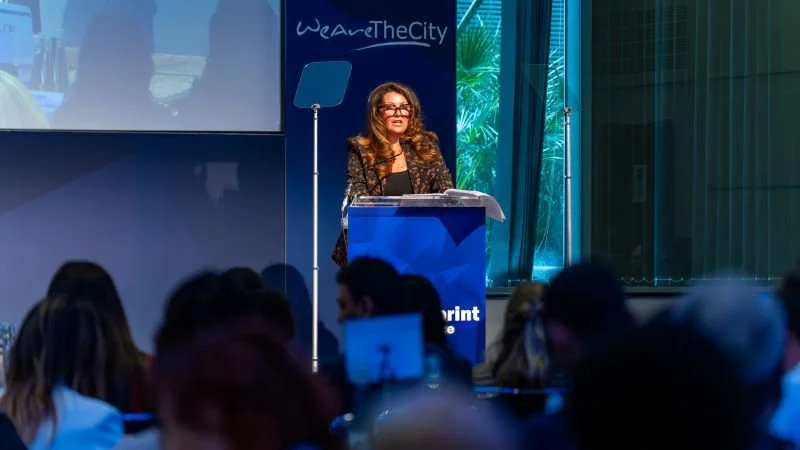
When Dr Vanessa Vallely OBE, CEO of We Are The City, took to the podium, she brought clarity and honesty - and the room felt it.
She drew a distinction that reframed how ERG success is measured. She used her own organisation to illustrate the point. We Are The City has 80,000 members. The active community, the people engaging consistently, asking questions, supporting each other across roughly 20 WhatsApp groups between events, numbers closer to 5,000. "That is the real community," she said. "Networks engage ad hoc through events. Communities interact continuously." The implication for ERG leaders was direct: member registration numbers are the wrong metric, and the organisations that count them as success are measuring the wrong thing.
Her three-step action plan was specific enough to use this week. First, reconnect to the strategy: read the company's publicly available strategy, speak with the DEI lead and HR about their current priorities, and identify the problems the business is actively trying to solve. Second, focus on one business problem for six months rather than spreading effort across everything and proving nothing. Third, define two or three outcome-based measures tied to that problem. Not attendance figures. Outcomes.
On sponsorship, she was pointed: create formal job descriptions for sponsors with defined responsibilities, advocacy channels and stakeholder commitments. One network she referenced made the process competitive, interviewing candidates against clear criteria. The result was sponsors who could be held accountable rather than simply associated.
She closed with a challenge posed as a question: if you were starting your ERG today, knowing what you know about the current climate, how would you design it so it's impossible to ignore? The question was not rhetorical. It was the practical exercise she left the room with, and it reframed the entire session not as a record of what ERGs have been, but as a blueprint for what they need to become.
Session Seven: Influence & Persuasion – Gaining Buy-In and Executive Sponsorship
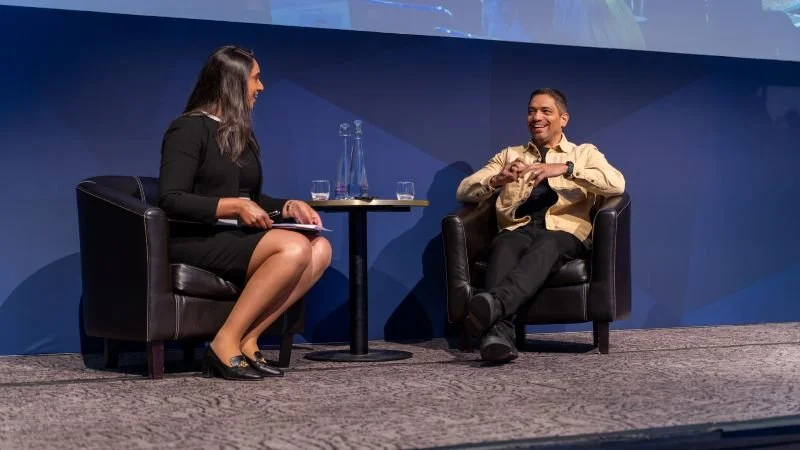
Piers Linney MBE, entrepreneur, former Dragons’ Den Investor, and member of Sky's Diversity Advisory Council, was in conversation with iCAN Co-Chair Kishan Mangat. His framework for building lasting influence was direct: "Over time, the longevity comes from proving that you are affecting change," he said. "If you can't measure it, you can't manage it. If there is a direct connection to the business, the bottom line, people understand that.”
The Sky Diversity Advisory Council, formed following the murder of George Floyd and Sky’s commitment of £30 million to improving diversity, gave him a clear model for what accountable sponsorship looks like in practice. The council does not dream up ideas for the business. It challenges, holds to account, and helps adjust. “We shine a light on things,” he said. “And that makes a difference.” The lesson for ERG leaders: sponsors who simply lend their name are not sponsors. The real value is in the challenge, the doors opened, and the advocacy in rooms the ERG is not in.
On building relationships with senior leaders, he was equally forthright. It requires treating the conversation like a sales conversation. “If you want resources and recognition, you are going to have to build relationships and sell to people. Ask yourself: what am I selling? Why does this organisation exist? Why should anyone give me their time and energy?”
He was also direct about the importance of making a specific ask. “Build the relationship,” he said, “and at some point, ask for something. If you don’t ask, you don’t get.” ERG leaders who wait for senior leaders to notice their work and offer support are waiting for something that rarely arrives.
His closing point was on resilience and presence. Walking into rooms where you are underestimated, or misread, is part of the reality for many ERG leaders and the people they represent. “You should never walk into a room feeling you don’t belong,” he said. That is both the personal lesson and the organisational one: ERGs that create genuine belonging make it easier for people to walk into every room that follows.
Session Eight: ERGs of Tomorrow - Building Futures, Leveraging AI and Managing Risk
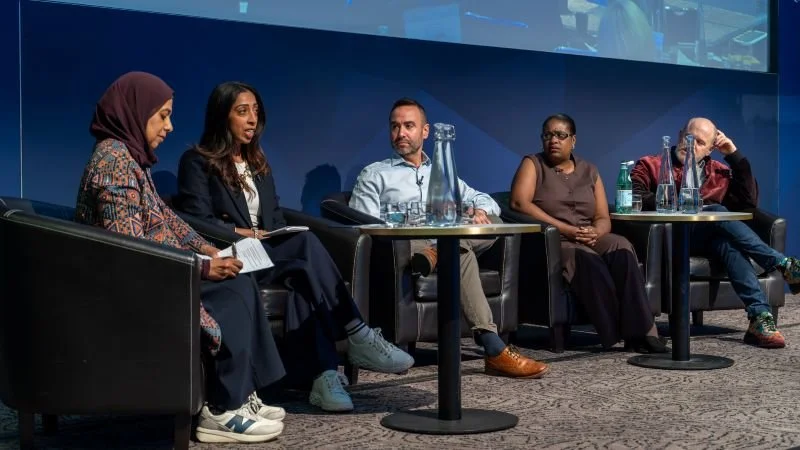
The conference closed with a panel, facilitated by Rukasana Bhaijee, Global Head of DEI at the Financial Times, that brought together Bal Mahil (iCAN), Serita Murray (Black Excellence Network), Nick Creswell (Talentwell Advisory), and Erik Johnson (Markel International). The question: what must ERGs become next?
Bal Mahil was unambiguous about where AI fits. "AI is an enabler for belonging. Human relationships and influence remain the ERG USP." At AXA XL, multicultural and gender networks ran joint sessions on generative AI, helping colleagues understand bias, consent and fair use. The ERG became the educator.
Nick Creswell repositioned AI as a capacity question. When admin headcount is cut, the burden does not shrink. AI absorbs it, freeing people for the work that matters. "Reframe AI from productivity to growth: network growth, organisational growth and personal development."
Serita Murray raised the governance question that ERG leaders need to be asking. ERG data feeding into AI systems must be consented, representative and recent. "ERG data is only a small, potentially skewed subset." If ERG insight informs how organisations hire, develop and promote people, data quality is not a footnote. It is the point.
Erik Johnson described a visible shift in the insurance market toward all-inclusion models, cross-ERG collaboration and external partnerships. Low-cost, data-driven campaigns outperform expensive events in terms of measurable impact. "Recognition matters," he added. "Informing CEOs of volunteers' impact, a simple thank-you, these things have outsized effects on commitment and morale."
The panel closed with each member giving one action for the next 30 days:
Bal Mahil: Double down on human connection and stay in the AI conversation so ERGs shape the outcome rather than inherit it.
Erik Johnson: Make at least one ERG event a business development event. Invite clients. Let leadership see the commercial value directly.
Serita Murray: Align ERG objectives with specific business goals, then find your middle managers. They are the ones who decide whether inclusion becomes everyday culture.
Nick Creswell: Identify one ERG output that connects to a metric your organisation cares about, find a senior leader, and make the connection explicit.
Delegate Feedback
The conference generated a strong body of delegate feedback, much of it generous in its assessment of the day and specific in its suggestions for the future. Here is what the responses told us.
“Overall, it was brilliant – really nice atmosphere, great range of people, great venue, great speakers. Thank you so much; we were proud to sponsor.”
- Carrie-Anne Adams, Head of I&D, Tokio Marine Kiln
“I loved the intention and passion from the team that created the event, and I enjoyed connecting with colleagues from across the market, some new and some old.”
- Alice Scott, Head of Culture & Talent, Asta
“I loved it all. The talks were proper in terms of ERG and DEI struggles – great, and it didn’t gloss over anything. I liked how real it was.”
- Matt Cham, Engagement & Culture, Warner Music Group
“I took away so much from almost every speaker. It was a really useful day.”
- Santa Gascoigne, Head of Market Management, Jensten
About the ERG Blueprint Conference
The ERG Blueprint Conference 2026 was organised by iCAN, the Insurance Cultural Awareness Network, and Howlett Brown. It took place on 28 April 2026 at the Leonardo Royal Hotel, St Paul's, London. Sponsors included Aon, AXA XL, QBE and Tokio Marine Kiln. The conference partnered with UK Youth, D&I Spy and WeAreTheCity.